Foundation in Guatemala and El Salvador from Spain
In the last century, the countries of Latin America and the Caribbean have suffered many conflicts and abuses by military, authoritarian and corrupt governments inspired and greatly influenced by capitalist ideologies and movements, from the United States and other countries, who took advantage of the situation of poverty and dependence of poor countries to achieve their goals of power and wealth. They often concealed their ambitions in religious theories (Christian sects) who preached passive submission to the power of the government, promising a happy life after death. The Church, and especially religious life, seeing these situations of injustice and deception under the mantle of faith, denounced such procedures, and instead, encouraged and helped the people to become aware of their dignity and their rights to a dignified and just life. Very serious conflicts and even persecutions arose against people who bravely stood on the side of the poor and marginalized, helping them to discover deceptions and false promises and denouncing the injustices of the systems of power.
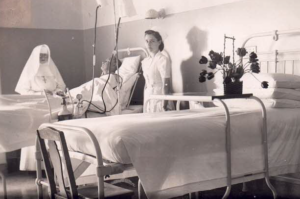
Among these prophets of truth and justice are the Missionaries of the Sacred Heart who shared the lives of simple people in various places making them feel the closeness of the God of love revealed in the Heart of Jesus. In Guatemala, the Missionaries defended the life and integrity of the native peoples, remaining among them even when systematic persecution broke out against missionaries, catechists, and other prophets of the community. They worked to raise people’s awareness, denouncing a religion of submission, and promoting authentic spiritual human development to achieve a dignified life here on earth. Thousands of these announcers of the God of Love were persecuted and murdered, among them three Missionaries of the Sacred Heart of Jesus along with a group of catechists and collaborators. The charism and spirituality of the Sacred Heart were welcomed with great joy and hope by the poor and simple people.
The same can be said about the neighboring country, El Salvador, where the suffering of the simple people was indescribable. Among many prophets and martyrs, Bishop Oscar Romero stood out. He denounced the abuses of the military government and gave his life for the good of the people when he was murdered during the celebration of Mass at the time of the consecration. These realities, well known to the Missionary Sisters of the Sacred Heart, ignited in the small group of sisters from Spain a missionary enthusiasm with the desire to go to these places despite all the risks that this implied. They wanted to share, from the poverty of their small number, the richness of the charism and devotion to the Sacred Heart.
After discernment, it was concluded that two MSC Sisters from the District of Spain were going to begin mission in El Salvador in 1989. They passed through Guatemala, where they were received with great affection by the MSC Fathers. Because the house in El Salvador was not ready, they continued traveling through the mountains to the neighboring country. Passing through the capital and visiting the tomb of Oscar Romero, they entered the periphery, which resembles the jungle with lots of vegetation and small houses hidden among the bushes. They arrived at a poor parish that the bishop had entrusted to the fathers to share the pastoral service with them. The simple house, in the same style as the others, had a kitchen and a chair as the only furniture, but a painting of Our Lady received them with affection. A family offered them simple meals and at night they slept on cots. The people, realizing their presence, made them experience their great hospitality by bringing them fruits and other products from their farms and ensuring their safety amid threats of violence, in a country still in a war between the military and revolutionaries.
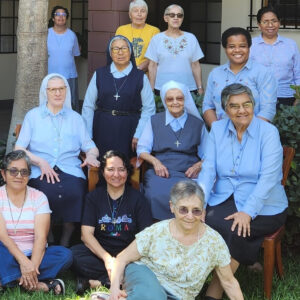
The sisters went out the next day and soon made friends with many. A chapel had been built on a small hill and to get to it one had to climb many steps in the suffocating heat. For the inauguration, the bishop of San Salvador came, welcoming the MSC Sisters and encouraging everyone to collaborate closely. The sisters soon began their evangelizing work, meeting with small so-called “chapels” built with sticks and branches. They met for catechesis, reflection and organization and appropriately celebrated the liturgy according to the parents’ possibilities. Announcing a God of love amid an environment of insecurity and violence was a great challenge. They were always “out” visiting the families, listening to their problems and needs and together they looked for possible improvements. The dangers of violence were very real and more than once the MSC Sisters and MSC Fathers experienced it firsthand.
The sisters’ testimony of closeness and kindness attracted several young women who also wanted to become missionaries. Over the years other Spanish MSC Sisters enthusiastically shared this work among marginalized people. They managed to open a health center and daycare centers for children, who were often left alone during the day since single mothers and adult relatives had to work. They created environments of welcome, tenderness, appreciation, mutual affection, and hope for a better future. Their hard work and generosity were a testament to the love of the Sacred.
The selfless service of the Missionary Sisters was recognized and respected and even defended by simple people and even by some “violent gangs”. The fathers and sisters could enter the largest prison in the country near their parish to listen to the prisoners, many of them innocent, and speak to them about the love of the Heart of Jesus who does not forget them.
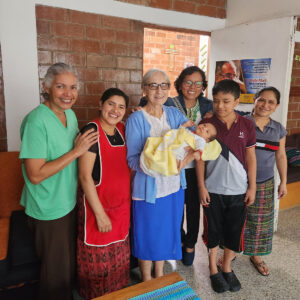
The first young woman who entered the congregation in Central America was originally from Guatemala and had a meaningful experience in the community in El Salvador. As vocations increased, MSC Sisters opened a formation community in Guatemala. An appropriate place was found near the missionaries’ headquarters. This made it easier for them to support the pastoral work in the parish entrusted to them and it offered young women good training in religious life. In the parish the sisters dedicated themselves to catechesis, liturgical celebrations, and families. In addressing the urgent needs of the poor, they cared for children in a parish shelter where they were offered food and help with their schoolwork.
The Sisters’ presence was always threatened by crime, especially by so many murders of simple women from the mountains, a population largely oppressed and marginalized from social life. When able, they supported people fighting for justice and human rights, especially women, by participating in demonstrations against abuses of power and discrimination.
Thanks to the MSC presence, their charism and spirituality have been “incarnated” in the people in an experiential way. The presence of the male missionaries and the Missionary Sisters continues to provide testimony among the people of Guatemala, the Dominican Republic, and El Salvador which make up Province Latina. MSC Sisters of different nationalities and cultures share missionary service together, testifying that the MSC charism and spirituality know no limits.

FOR PERSONAL REFLECTION
• When you get in touch (emotionally, spiritually) with this story, what do you admire and value most about the way those sisters lived the MSC mission in the context of their time? (Identify 3 points)
• What are the urgent needs in our world today to which we are called and best suited to respond? (Identify 3 points)